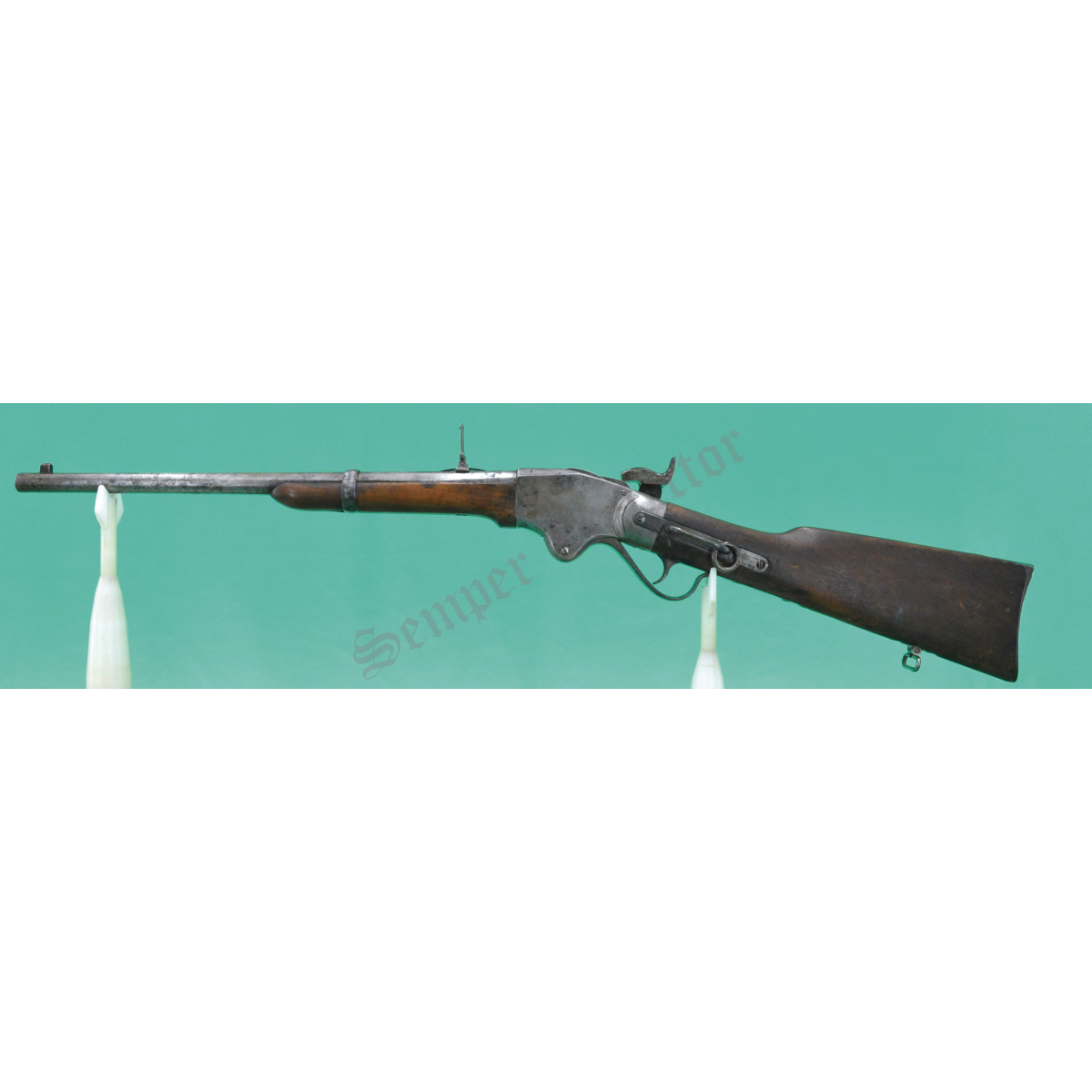
Spencer M1865 – .56-50 Spencer RF – circa 1867-1868 – s/n 101###
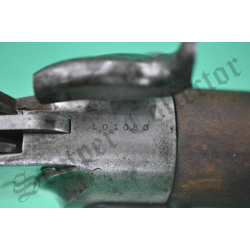
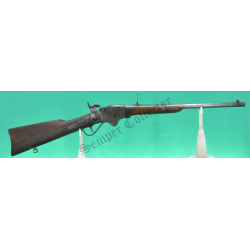
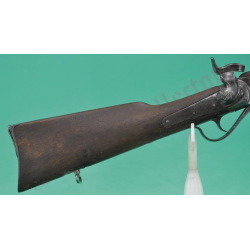
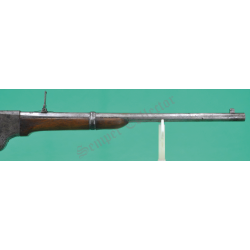
This Spencer M1865 repeating carbine, serial no. 101###, chambered in .56-50 Spencer Rimfire, is a late-production example manufactured by the Spencer Repeating Rifle Co. of Boston, most likely circa 1867-1868, after the American Civil War.
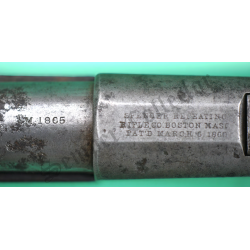
The receiver retains its “SPENCER REPEATING RIFLE CO. BOSTON MASS. / PAT'D MARCH 6. 1860” marking, while the barrel is marked “M 1865”. Serial number 101### belongs to Spencer's late post-Civil War numbering range; “1865” therefore refers to the model rather than the actual year of manufacture.
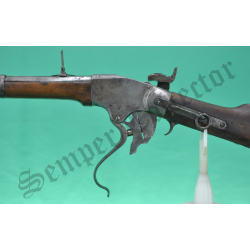
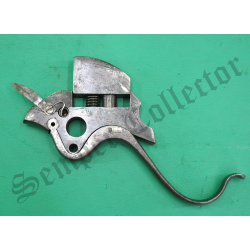
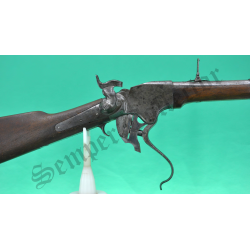
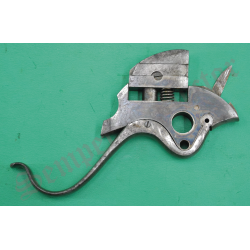
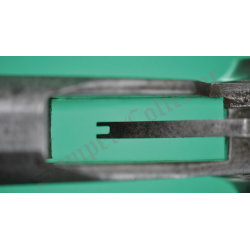
Identification as a late M1865 is confirmed by several mechanical features: a six-groove barrel, .56-50 rimfire chambering and the long blade extractor corresponding to the M1865 system. Examination of the mechanism therefore allows a Model 1867 with Lane extractor to be ruled out, despite the chronological proximity of the two production types.
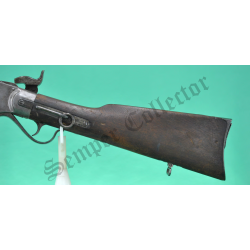
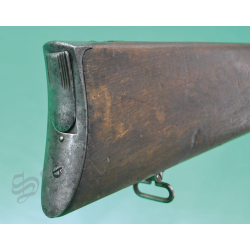
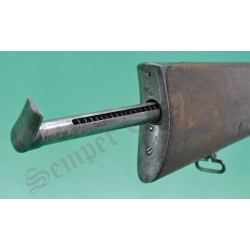
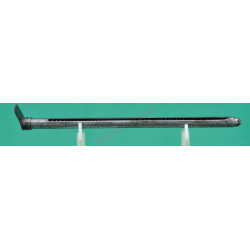
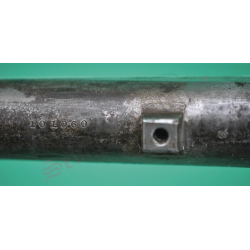
The carbine is complete and mechanically functional. The breechblock assembly, rimfire firing pin, extractor and its springs are present and consistent. The seven-round tubular magazine housed in the buttstock also retains its removable magazine tube, follower and spring. Internal components are noticeably better preserved than the exterior surfaces and show no obvious evidence of modern reconstruction.
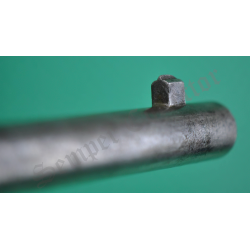
Following removal of old oxidation, the bore revealed an interesting state of preservation: a sound chamber with no visible pitting, old pitting mainly concentrated in the first third of the bore and extending partially towards the middle, followed by a substantially better-preserved latter half. All six grooves remain deep, sharp and clearly defined through to the muzzle. The condition observed is consistent with a firearm formerly used with black powder and insufficiently cleaned after firing.
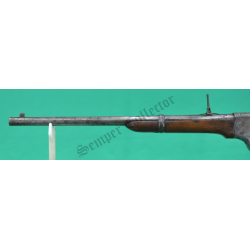
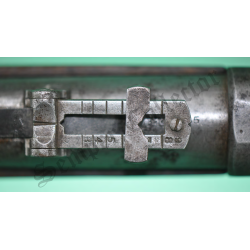
Externally, the carbine retains a homogeneous period patina, with loss of the original finish, oxidation and normal signs of use. The markings remain clearly legible and the wood shows ageing consistent with the metal components. No obvious major restoration or modern alteration has been identified.
Its period of manufacture also raises an interesting historical possibility. France purchased large quantities of Spencer firearms from the United States during the Franco-Prussian War of 1870-1871. A post-Civil War M1865 such as serial no. 101### is chronologically of the type that could have been exported on that occasion. However, no French proof or ownership marking, nor any document directly linking this serial number to the French purchases of 1870, has been found; such provenance therefore remains plausible but unproven.
Serial no. 101### is thus an interesting example of the late M1865 production manufactured by Spencer after the Civil War: a complete and coherent carbine retaining its original-type mechanism and complete magazine, with a remarkably sound chamber and strongly defined rifling despite evidence of historic black-powder use.